LOCAL - Lowering compliance burdens for local and national associations
By developing the first-ever Due Diligence Assessment (DDA) Passporting Online Tool, DRC and its partners pioneered a digital solution that streamlines due diligence processes, eases complicance burden, and enbales local and national associations to engage more fully in humanitarian responses.
Why This Project Matters
Local and national actors in West Africa and beyond are facing increasing pressure to comply with rigorous donor requirements:
Complex, fragmented due diligence – Each agency has its own process, making compliance repetitive and time-consuming.
Limited access to institutional funding – High compliance thresholds hinder L/NAs from partnering with donors and INGOs.
Duplication of assessments – Lack of data-sharing results in wasted time and effort across the sector.
This project seeks to align with DRC 2025 strategy: fostering stronger partnerships, accountability, digital innovation, and localisation.
Project Approach
The LOCAL is centered around collaboration, transparency, and digital transformation:
Trust-building – Engaged both assessors and assessed parties to ensure mutual recognition of due diligence efforts.
Mapping compliance processes – Created a shared database to identify overlaps, synergies, and critical gaps.
Tool development – DRC HQ Digital & IT Projects Unit designed a beta version of an online passporting platform. This allowed DRC to own, operate, and maintain the tool internally, increasing its sustainability.
Pilot testing – The tool was tested using CHS audit data from 10 national NGOs through the LOCAL project.
Iterative feedback – Testing outcomes fed into refining the tool and ensuring it meets the sector’s needs.
Capacity building – Implemented activities to help L/NAs meet Core Humanitarian Standards (CHS) compliance.
Funded by the European Union, This project is a joint effort across DRC's Regional Bureau in West Africa & the Americas (WAAM), the Localisation Unit, and Global Digital & IT, with input from external partners such as HQAI and SPONG. Several NGOs expressed interest in sharing their internal DDA tools and being associated with the development and use of the passporting initiative at the regional level.
This innovation could redefine compliance for local actors globally, reducing administrative barriers and accelerating localisation.
/ Romain Sztark, Head of multi-country operations, DRC WAAM
Training Modules
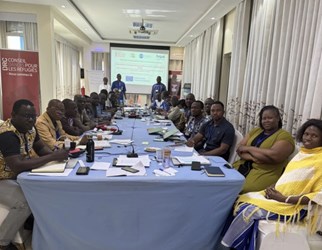
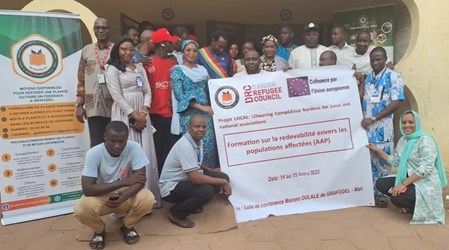
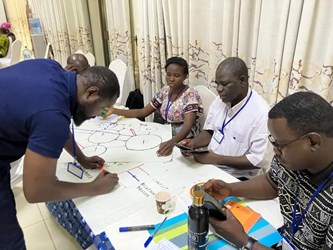
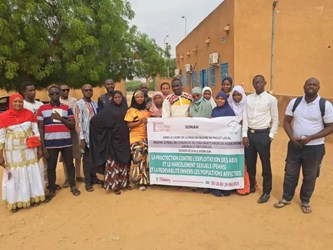
Six modules were developed to strengthen the skills of Local and National Associations (LNAs) and humanitarian staff, helping them deliver higher-quality, more accountable, and more ethical interventions.
They combine theoretical insights with practical case studies, enabling participants to apply key humanitarian principles and standards in their daily work.
The six modules cover core areas of humanitarian action: Humanitarian Principles, Conflict Sensitivity, Community Engagement, PSEAH (Protection from Sexual Exploitation, Abuse and Harassment), AAP (Accountability to Affected Populations), and Mainstreaming Protection.
Together, they provide participants with essential knowledge and practical tools to ensure that humanitarian responses are inclusive, principled, and responsive to the needs and rights of affected communities.
← →
Project Impact
Reduced compliance burden – L/NAs can reuse vetted information and focus more on delivery than documentation.
Improved funding access – Streamlined DDA processes made it easier for L/NAs to secure donor support.
Sector-wide standardisation – Encouraged data-sharing and mutual recognition among humanitarian actors.
Enhanced trust and transparency – Strengthened partnerships between local and international actors.
The passporting tool was designed with replicability and sustainability in mind. The team envisioned:
Expansion beyond Sahelian countries where DRC is active.
Integration into regional funds like the Sahel Regional Fund, hosted by DRC.
Potential global uptake – Fee-based sustainability and adoption by multiple INGOs and donors.
Long-term business plan – DRC retained IT ownership, enabling future scale-up and global use.
Training Modules
Six training modules were developed to strengthen the skills of Local and National Associations (LNAs) and humanitarian staff, helping them deliver higher-quality, more accountable, and more ethical interventions. They combine theoretical insights with practical case studies, covering core areas of humanitarian action:
Humanitarian Principles
Conflict Sensitivity
Community Engagement
Protection from Sexual Exploitation, Abuse and Harassment
Accountability to Affected Populations
Mainstreaming Protection
Together, they provide participants with essential knowledge and practical tools to ensure that humanitarian responses are inclusive, principled, and responsive to the needs and rights of affected communities.
Module 1: Humanitarian Principles
Project Overview
A two-pager providing quick overview of the LOCAL project.
Two pager: LOCAL - Lowering Compliance Burdens for Local and National Associations
2 file(s)
Funded by
Directorate-General for European Civil Protection and Humanitarian Aid Operations