

News
Anticipatory action triggered to respond to drought in Somalia
With funding from ECHO, DRC has now activated an anticipatory action mechanism to support pastoralist communities in Puntland to cope with the impacts of drought.

The anticipatory responses has been triggered as results from our drought-displacement simulation model, using the latest seasonal rainfall forecasts and market price data, suggest that significant displacement can occur in the months of May and June. This is coupled with field level monitoring data that suggest communities have already now run out of water and are starting to use negative coping mechanisms.
The targeted communities will over the coming months receive cash- and water assistance to prevent loss of livelihoods and resulting displacement.
The activities are part of a wider 24-month ECHO project to refine and develop the drought-displacement simulation model for Somalia and the Sahel, and test and document the added value of anticipatory action in response to drought.
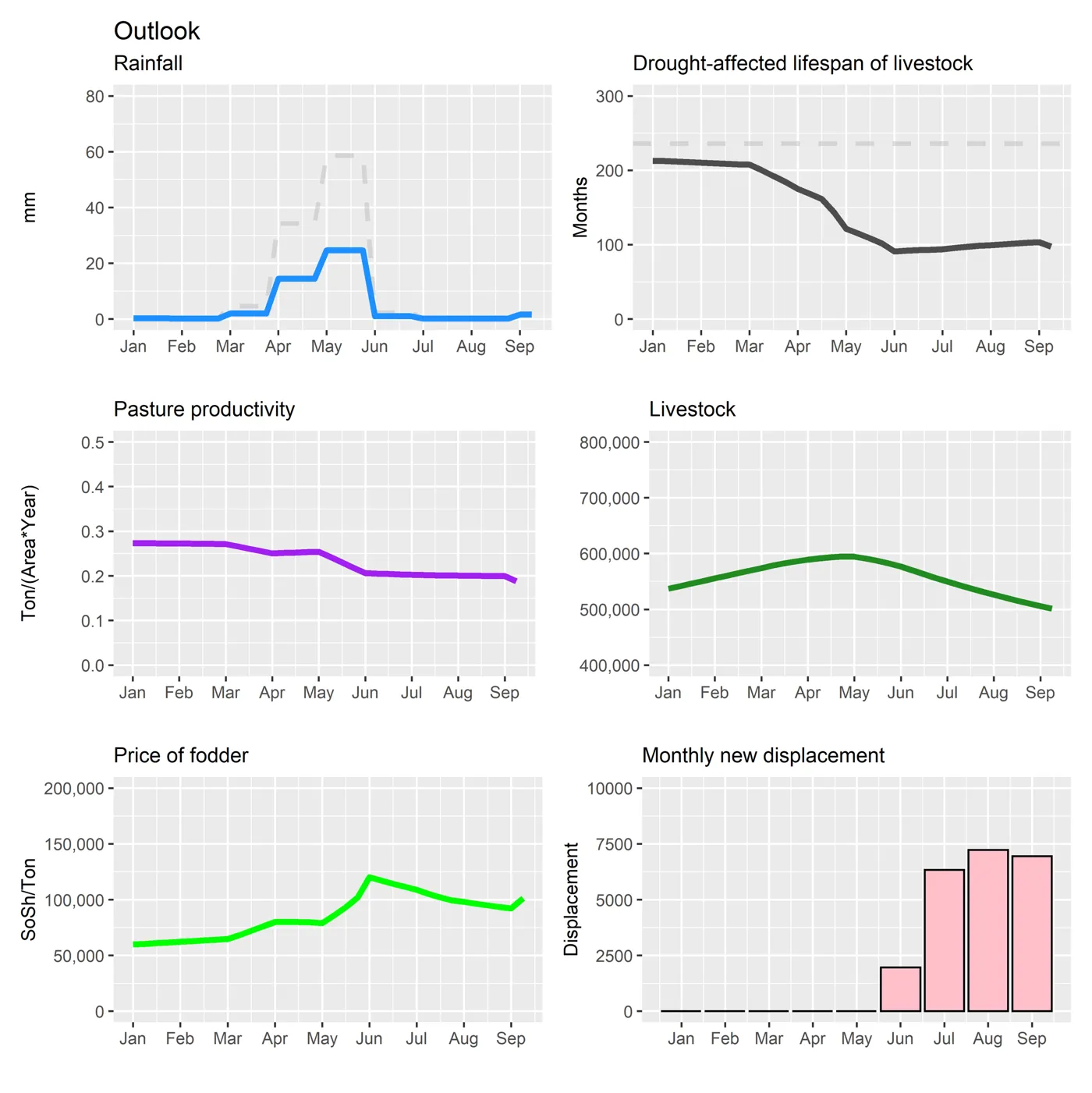
Outputs from drought simulation model
Drought-simulation model
Read more about the drought-simulation model here

Blockchain-based Payment Solutions in Restrictive Environments

One shock away: EU-funded programme targets over 234,000 vulnerable people as Yemen faces…

Ukraine: Two brothers from Kherson learn to manage on their own again

A small business and big plans for tomorrow

Finding steadiness while life remains uncertain

Displacement forecasting for anticipatory action: Guidance launch

Books before belongings

ProLAC facilitates discussion on protection challenges in Latin America and the Caribbean

Diaspora in Anticipatory Action: the Missing Link

AHEAD Learning Series

A lifeline for mothers: How cash transfers helped a mother of eight

THRIVE: Access to Appropriate Finance for Displacement-Affected Communities

SAMI: AI-Powered Chatbot for Migrants' Information and Humanitarian Data Collection

Fair recycling 2.0: from waste to opportunity

How Black Soldier Fly farming is supporting livelihoods in Dadaab, Kenya

Sudan: In‑Depth Gender‑Sensitive Joint Labour Market Assessment (LMA)

From creativity to entrepreneurship: Fatma’s Handicrafts Business

A future worth investing in: Hawa’s Perfume Business

Stitching together a future: Asha’s sewing business

Ukraine: A hospital appointment in Mykolaiv, and no way to reach it

Overall information on anticipatory action in DRC

Diaspora's role in the AHEAD project

DRC Community Resource Centres: Connecting displaced people with information and support

Raising awareness and building safer communities in Syria

Confined by design: the human cost of protracted displacement in Gaza

Webinar - Confined by design: the human cost of protracted displacement in Gaza

LOCAL - Lowering compliance burdens for local and national associations

Before I am a humanitarian, I am human

Sahel: Protection Analysis from Project 21

Press Release: Amid escalating conflict and growing displacement, the Yemen Displacement…

Diaspora in anticipatory action

A roof that keeps the rain outside

New forms of cyber-bordering: When social media becomes the border

AI for Climate Resilience in Humanitarian Contexts

Taiz, Yemen: As fighting intensifies, civilian lifelines are at risk in Yemen

Experiences of Return and Reintegration. Voices of returnees from Denmark to Iraq

The Danish Refugee Appeals Board reopens cases concerning Dublin-transfers to Croatia

New EU agreement on return: A punitive approach to return will not be safe and…

Protecting Rights At Borders

Contact us

Farming Under Pressure. Challenges Facing Farmers in Syria

From Presence to Decision. Making Syrian-led Humanitarian Coordination Real

DRC scaling up its HMA response in Syria

Labour Market Assessment Report, Syria

Clearing the way for safer communities: Restoring access to water and livelihoods in…

AHEAD model background info, forecast reports, etc.

Ukraine: Rapid Protection Assessment — Access to Compensation Mechanisms for Damaged and…

Stories from the Field: Coordinating humanitarian action amid Haiti's escalating crisis

Gaza ceasefire exists in name only, say more than 100 organisations
More content like this
Page
Anticipatory Humanitarian Action for Displacement (AHEAD) model

News
DRC featured in new publication on use of digital tools for climate adaptation and resilience

News
DRC receive funding for new anticipatory action pilot

Document
El Niño 2026–27 in the East and Horn of Africa: A predictable displacement crisis, and how to prevent it
Document
AHEAD Learning Series

Page
Foresight: Displacement forecasts

Page
Anticipatory Action

Page