

News
12,000 pushbacks in 2021 reflects worrying normalization of illegal practice
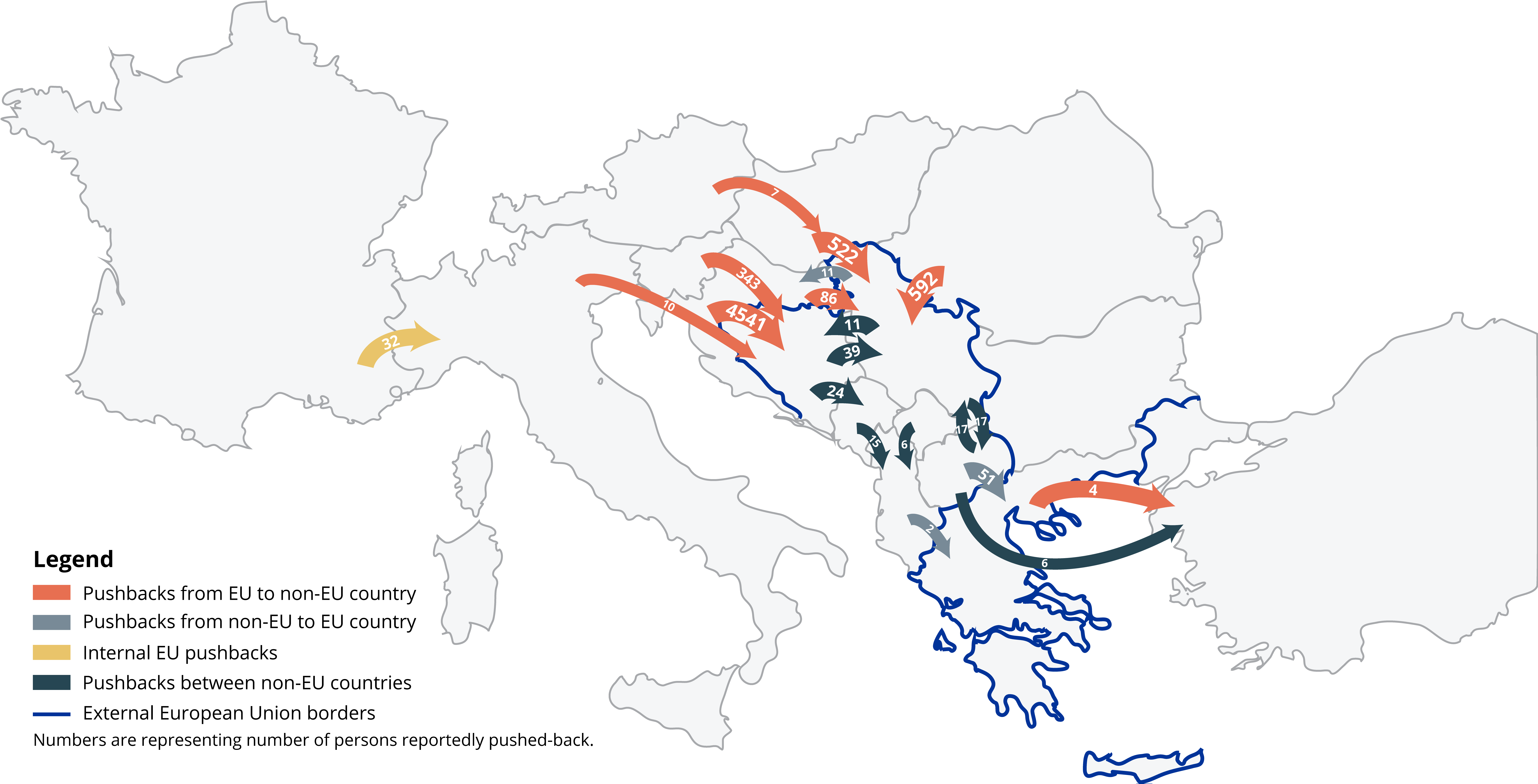

From January to November 2021, DRC and six civil society organizations across Europe documented close to 12,000 incidents of men, women and children being pushed back by border police, law enforcement officials or other authorities from EU Member States. The pushback methods often include physical and sexual violence, harassment, extortion, destruction of property, theft, forced separation of families, and denial of the right to apply for asylum.

The most recent report is the third to be published this year and is part of the Protecting Rights At Borders (PRAB) initiative. It includes data from July to November and shows that, by far, the highest rates of pushbacks were recorded at the border between Croatia and Bosnia and Herzegovina. Overall, Afghan nationals are the largest population reporting pushbacks. 10 percent of all pushback incidents involve children.
The data collected for this report supports previous descriptions of an unofficial but consistent pushback routine, during which border officials confiscate or destroy personal belongings and valuables, in particular phones and cash. Their motivation seems to be twofold: to ensure that any potential evidence of the pushback is destroyed, and to make a profit.
We are talking about people in an extremely vulnerable position. Stealing or destroying their very few valuables, not least their phones, which for many are an essential lifeline, is an absolute disgrace. The fact that this seems to be a widespread and even normal practice is extremely worrying, and calls for investigations to ensure that perpetrators are put to justice
Charlotte Slente, Secretary General of the Danish Refugee Council
In recent months, public attention has been focused on the Belarusian border with the EU, where pushbacks have also become commonplace.
This reflects a dangerous and growing trend, where EU member states devise ad hoc legal justifications for pushbacks, and apply these questionable doctrines in situations that should be, and indeed are, manageable within the existing laws and commitments they are bound to by the European Convention on Human Rights.
"Whether it happens at the EU border with Belarus, in Croatia, or at the Mediterranean, pushbacks are illegal. Law enforcement officials have the right to protect states' borders, however, human rights must be upheld. Rights violations at the EU's borders are a black stain on the EU’s reputation as a proponent of human dignity and respect for people’s fundamental rights," says Charlotte Slente.
About the report
The report builds on data collected during protection monitoring activities and case referrals for legal remedies. Resorting to pushbacks as a means of protecting states' borders is illegal.
States have the obligation, under the Universal Declaration on Human Rights and the European Convention on Human Rights, to ensure that people can effectively seek asylum and to respect the principle of non-refoulement.
States are further, under the same legal frameworks, prohibited from undertaking collective expulsions and required to treat each person with human dignity.
Find the report here.

PRAB Partners









More content like this
page
Protecting Rights At Borders
news
Protecting Rights at Borders (PRAB)

news
Push back of responsibility: Human Rights Violations as a Welcome Treatment at Europe’s Borders
news
Using family separation as deterrent – new report documents alarming illegal push-back methods
news
Countering human smuggling: No silver bullet for safer mobility
news
Croatia/EU Border Monitoring System: Effective Mechanism Needed - Independent, Broad Mandate, Adequate Resources

news
Need for calm and proportional response at the EUs external borders
news