

News
Pushbacks at EU’s Borders
Pushbacks are expulsions without legal justification and procedure, usually employed by border police, law enforcement officials or other authorities. It is being used to push foreigners such as migrants, refugees, and asylum seekers from a state’s territory to the territory of another state without regard for the individual’s circumstances and right to seek asylum.

At many places along the Central Mediterranean and Western Balkan routes, at EU’s external borders as well as at EU’s internal borders, the illegal practice of pushbacks is being used as a systematic deterrence measure and as a de facto tool for border management.
DRC and partners are present in many European countries where pushbacks take place. We carry out several different activities: we collect data on pushbacks; we gather documentation and evidence of rights violations; we provide medical relief and legal support to migrants, refugees, and asylum seekers; and we are present in Brussels where we advocate for the respect of human rights obligations under European and international law.
On these pages you’ll be able to find more information about our work and positions on pushbacks and border management.
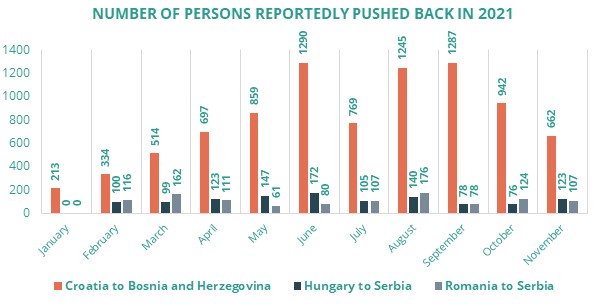
Why pushbacks are illegal
- Resorting to pushbacks, regardless of whether these involve violence, as a means of protecting states’ borders constitutes an illegal practice.
- It risks violating the principle of non-refoulement, as well as the prohibition of collective expulsion and it prevents access to procedures for international protection.
- States have the right to control movement across their borders, however this must happen in compliance with their obligations under international and European human rights law.
- Human rights compliance must not be an obstacle to migration management – a rights-based approach to border management is indispensable.

Partner organisations for the PRAB initiative





More content like this
page
Protecting Rights At Borders
news
Protecting Rights at Borders (PRAB)

news
Beaten by police, bitten by dogs, and robbed of all rights: New Report Reveals Alarming Pushbacks and Violations at Europe's borders

news
Teaching youth in Serbia about gender-based violence and rights

news
DRC Secretary General: We have reached 3 million Ukrainians

news
Protecting Rights at Borders: Beaten, punished, and pushed back

news
From Ukraine to Serbia: A living nightmare to escape war

news