Global

Globally, the DRC Diaspora Programme strives to effectively engage with diaspora networks both within and outside of their country of origin with the aim of enhancing their recognition within the humanitarian system and fortifying their long-term economic objectives. Recognizing the incredible potential of globally united diasporas, the DRC Diaspora Programme aspires to lend a helping hand to not only diasporas confronting crisis, but all diasporas across the world.

Diaspora Engagement for Self-reliance and Resilience

At a global level, the Danish Refugee Council (DRC) endeavors to leverage the positive impact of diaspora economic engagement to benefit households and local communities impacted by displacement in their countries of origin. Presently (2023) DRC is actively engaged in promoting diaspora economic engagement in Ethiopia, Lebanon, and exploring potential opportunities in Tunisia, Mali, and Kenya.

Diaspora communities play a pivotal role in providing economic support to their countries of origin through various means such as remittances, investments, and community grants, often surpassing the levels of international aid. These financial streams are essential for ensuring access to education, healthcare, food security, and supporting local businesses, which, in turn, generate employment opportunities. Despite regulatory and banking barriers, diaspora communities persevere in maintaining these vital financial flows.

Activities Include:

In spite of the size and propagation of diaspora economic engagement at household and community level in diaspora countries of origin, the effects at local level and the modalities used between diaspora and households and communities are generally poorly documented.

For design of interventions and to avoid harming or usurping the essential flows, DRC is committed to always conduct a piece of research at the local level before any programming can start.

Whereby diaspora have supported relatives to use their remittances to become self-reliant. This is typically done through the use of social media platforms that are used within diaspora networks and between diaspora and relatives.

This is a simple set-up whereby recipients of remittances can apply for a top-up to their remittances from DRC, to start up a small business. It works as a tri-partite agreement between the recipient (contributing 10% of the investment), the sender of remittances (40%) and DRC (50%). Apart from the 50% top-up DRC provides training and coaching to the businessperson.

The basic idea is to allow senders and recipients of remittances to convert small monthly transfers to a larger business investment by using the track record of remittance sending/reception as collateral (together with a loan guarantee) for a loan. Once the business is profitable, the loan is repaid through those remittances they would have received anyway

Diaspora businesspeople who want to partner, or invest, in existing local companies, start up their own business in country of origin, or otherwise engage in ways that can support local job creation is the target group for this component.

The activities have so far included training and coaching on entrepreneurship, national legislation, and processes for investment/engagement.

Local authorities are supported to constructively reach out to and facilitate diaspora economic engagement at the local level. Activities have included website establishment, training, and mapping of existing processes and requirements for businesspeople to engage.

It is a widespread practice for diaspora groups /associations to mobilize funding in support of community initiatives in countries of origin. DRC is yet to do any programming to actively support such initiatives but is currently being explored as another type of engagement for DRCs diaspora programme. This could include top-up of diaspora contributions to community development initiatives.

Diaspora Business Engagement in Lebanon

In collaboration with DRC Lebanon and funded by Novo Nordisk Fonden under the CHASE Project, the DRC Diaspora Programme has in 2023 conducted research on diaspora business engagement in Lebanon.

The report documents how the Lebanese and Syrian diaspora contribute to the local economy and job growth in five selected communities in Lebanon. It outlines various business engagement models by the diaspora, detailing their dynamics with relatives in their countries of origin. The research underscores the vital role diaspora engagement plays in livelihoods and job creation in Lebanon. The chosen villages in North and East Lebanon (Burj Al Arab, Wadi Al Jamous, Baalbek, Shmustar, Zahle, and Majdal Anjar) were selected due to their hosting of a significant number of Syrian refugees and aligning with DRC's economic recovery initiatives.

Key findings

1. Investing to support relatives: Diaspora primarily aids relatives in establishing businesses to replace traditional remittances for daily expenses.       

2. Two main business initiatives: Diaspora members assist relatives in starting businesses through for-profit or for-charity approaches.                                                                                                                 
3. Family as business partners: Diaspora engages family members as primary partners for initiating and managing business investments.                                                                                                    
4. Familiarity and trust: Trust and familiarity drive business collaborations within the family, considered essential for diaspora financial contributions.

Why is the diaspora important?

The diaspora is the backbone of Lebanon's economy, contributing significantly with 6.84 billion USD in remittances in 2022, accounting for 33% of the GDP. While the majority of diaspora members send remittances for immediate family needs, others support relatives to establish self-reliant businesses and thus reducing dependency on transfers.

The impact of diaspora engagement in Lebanon

Diaspora business engagement had a clear positive impact on business owners and their families. Respondents attribute their business starts and growth to diaspora support, enabling job creation, improving working conditions, providing for the wider family and empowering women. For the diaspora, these investments ensure family well-being, savings, and retirement in Lebanon.
Diaspora Business Entrepreneurs Video Series

Diaspora in Anticipatory Action: the Missing Link

AHEAD Learning Series

A lifeline for mothers: How cash transfers helped a mother of eight

THRIVE: Access to Appropriate Finance for Displacement-Affected Communities

Blockchain-based Payment Solutions in Restrictive Environments

SAMI: AI-Powered Chatbot for Migrants' Information and Humanitarian Data Collection

Fair recycling 2.0: from waste to opportunity

How Black Soldier Fly farming is supporting livelihoods in Dadaab, Kenya

Sudan: In‑Depth Gender‑Sensitive Joint Labour Market Assessment (LMA)

From creativity to entrepreneurship: Fatma’s Handicrafts Business

A future worth investing in: Hawa’s Perfume Business

Stitching together a future: Asha’s sewing business

Ukraine: A hospital appointment in Mykolaiv, and no way to reach it

Overall information on anticipatory action in DRC

Diaspora's role in the AHEAD project

DRC Community Resource Centres: Connecting displaced people with information and support

Raising awareness and building safer communities in Syria

Confined by design: the human cost of protracted displacement in Gaza

Webinar - Confined by design: the human cost of protracted displacement in Gaza

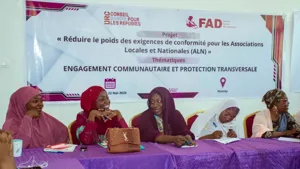
LOCAL - Lowering compliance burdens for local and national associations

Before I am a humanitarian, I am human

Sahel: Protection Analysis from Project 21

Press Release: Amid escalating conflict and growing displacement, the Yemen Displacement…

Diaspora in anticipatory action

A roof that keeps the rain outside

New forms of cyber-bordering: When social media becomes the border

AI for Climate Resilience in Humanitarian Contexts

Taiz, Yemen: As fighting intensifies, civilian lifelines are at risk in Yemen

Experiences of Return and Reintegration. Voices of returnees from Denmark to Iraq

The Danish Refugee Appeals Board reopens cases concerning Dublin-transfers to Croatia

New EU agreement on return: A punitive approach to return will not be safe and…

Protecting Rights At Borders

Contact us

Farming Under Pressure. Challenges Facing Farmers in Syria

From Presence to Decision. Making Syrian-led Humanitarian Coordination Real

DRC scaling up its HMA response in Syria

Labour Market Assessment Report, Syria

Clearing the way for safer communities: Restoring access to water and livelihoods in…

AHEAD model background info, forecast reports, etc.

Ukraine: Rapid Protection Assessment — Access to Compensation Mechanisms for Damaged and…

Stories from the Field: Coordinating humanitarian action amid Haiti's escalating crisis

Gaza ceasefire exists in name only, say more than 100 organisations

Never too late: A mother’s journey back to learning

PARTOCA — Participatory Research Team on Community-led Action

Conflict analysis for Uganda Refugee Resilience Initiative (URRI)

ProLAC calls for regional cooperation to address displacement and human mobility in Latin…

PRESS RELEASE: Sudan's harvest at risk as millions face worsening hunger in 2027

Wafaa's story: I do Humanitarian Mine Action for the next generation

Board of Directors: Minutes 2026

A safer future for Al Shami through EU-funded mine clearance and risk education

Click here to learn more about Diaspora Business Engagement
Watch the whole series in English here!
Watch the whole series in Somali here!

Diaspora in Anticipatory Action: the Missing Link

AHEAD Learning Series

A lifeline for mothers: How cash transfers helped a mother of eight

THRIVE: Access to Appropriate Finance for Displacement-Affected Communities

Blockchain-based Payment Solutions in Restrictive Environments

SAMI: AI-Powered Chatbot for Migrants' Information and Humanitarian Data Collection

Fair recycling 2.0: from waste to opportunity

How Black Soldier Fly farming is supporting livelihoods in Dadaab, Kenya

Sudan: In‑Depth Gender‑Sensitive Joint Labour Market Assessment (LMA)

From creativity to entrepreneurship: Fatma’s Handicrafts Business

A future worth investing in: Hawa’s Perfume Business

Stitching together a future: Asha’s sewing business

Ukraine: A hospital appointment in Mykolaiv, and no way to reach it

Overall information on anticipatory action in DRC

Diaspora's role in the AHEAD project

DRC Community Resource Centres: Connecting displaced people with information and support

Raising awareness and building safer communities in Syria

Confined by design: the human cost of protracted displacement in Gaza

Webinar - Confined by design: the human cost of protracted displacement in Gaza

LOCAL - Lowering compliance burdens for local and national associations

Before I am a humanitarian, I am human

Sahel: Protection Analysis from Project 21

Press Release: Amid escalating conflict and growing displacement, the Yemen Displacement…

Diaspora in anticipatory action

A roof that keeps the rain outside

New forms of cyber-bordering: When social media becomes the border

AI for Climate Resilience in Humanitarian Contexts

Taiz, Yemen: As fighting intensifies, civilian lifelines are at risk in Yemen

Experiences of Return and Reintegration. Voices of returnees from Denmark to Iraq

The Danish Refugee Appeals Board reopens cases concerning Dublin-transfers to Croatia

New EU agreement on return: A punitive approach to return will not be safe and…

Protecting Rights At Borders

Contact us

Farming Under Pressure. Challenges Facing Farmers in Syria

From Presence to Decision. Making Syrian-led Humanitarian Coordination Real

DRC scaling up its HMA response in Syria

Labour Market Assessment Report, Syria

Clearing the way for safer communities: Restoring access to water and livelihoods in…

AHEAD model background info, forecast reports, etc.

Ukraine: Rapid Protection Assessment — Access to Compensation Mechanisms for Damaged and…

Stories from the Field: Coordinating humanitarian action amid Haiti's escalating crisis

Gaza ceasefire exists in name only, say more than 100 organisations

Never too late: A mother’s journey back to learning

PARTOCA — Participatory Research Team on Community-led Action

Conflict analysis for Uganda Refugee Resilience Initiative (URRI)

ProLAC calls for regional cooperation to address displacement and human mobility in Latin…

PRESS RELEASE: Sudan's harvest at risk as millions face worsening hunger in 2027

Wafaa's story: I do Humanitarian Mine Action for the next generation

Board of Directors: Minutes 2026

A safer future for Al Shami through EU-funded mine clearance and risk education

Countries in the Diaspora Programme

Diaspora in Anticipatory Action: the Missing Link

AHEAD Learning Series

A lifeline for mothers: How cash transfers helped a mother of eight

THRIVE: Access to Appropriate Finance for Displacement-Affected Communities

Blockchain-based Payment Solutions in Restrictive Environments

SAMI: AI-Powered Chatbot for Migrants' Information and Humanitarian Data Collection

Fair recycling 2.0: from waste to opportunity

How Black Soldier Fly farming is supporting livelihoods in Dadaab, Kenya

Sudan: In‑Depth Gender‑Sensitive Joint Labour Market Assessment (LMA)

From creativity to entrepreneurship: Fatma’s Handicrafts Business

A future worth investing in: Hawa’s Perfume Business

Stitching together a future: Asha’s sewing business

Ukraine: A hospital appointment in Mykolaiv, and no way to reach it

Overall information on anticipatory action in DRC

Diaspora's role in the AHEAD project

DRC Community Resource Centres: Connecting displaced people with information and support

Raising awareness and building safer communities in Syria

Confined by design: the human cost of protracted displacement in Gaza

Webinar - Confined by design: the human cost of protracted displacement in Gaza

LOCAL - Lowering compliance burdens for local and national associations

Before I am a humanitarian, I am human

Sahel: Protection Analysis from Project 21

Press Release: Amid escalating conflict and growing displacement, the Yemen Displacement…

Diaspora in anticipatory action

A roof that keeps the rain outside

New forms of cyber-bordering: When social media becomes the border

AI for Climate Resilience in Humanitarian Contexts

Taiz, Yemen: As fighting intensifies, civilian lifelines are at risk in Yemen

Experiences of Return and Reintegration. Voices of returnees from Denmark to Iraq

The Danish Refugee Appeals Board reopens cases concerning Dublin-transfers to Croatia

New EU agreement on return: A punitive approach to return will not be safe and…

Protecting Rights At Borders

Contact us

Farming Under Pressure. Challenges Facing Farmers in Syria

From Presence to Decision. Making Syrian-led Humanitarian Coordination Real

DRC scaling up its HMA response in Syria

Labour Market Assessment Report, Syria

Clearing the way for safer communities: Restoring access to water and livelihoods in…

AHEAD model background info, forecast reports, etc.

Ukraine: Rapid Protection Assessment — Access to Compensation Mechanisms for Damaged and…

Stories from the Field: Coordinating humanitarian action amid Haiti's escalating crisis

Gaza ceasefire exists in name only, say more than 100 organisations

Never too late: A mother’s journey back to learning

PARTOCA — Participatory Research Team on Community-led Action

Conflict analysis for Uganda Refugee Resilience Initiative (URRI)

ProLAC calls for regional cooperation to address displacement and human mobility in Latin…

PRESS RELEASE: Sudan's harvest at risk as millions face worsening hunger in 2027

Wafaa's story: I do Humanitarian Mine Action for the next generation

Board of Directors: Minutes 2026

A safer future for Al Shami through EU-funded mine clearance and risk education

Projects in the Diaspora Programme

Diaspora in Anticipatory Action: the Missing Link

AHEAD Learning Series

A lifeline for mothers: How cash transfers helped a mother of eight

THRIVE: Access to Appropriate Finance for Displacement-Affected Communities

Blockchain-based Payment Solutions in Restrictive Environments

SAMI: AI-Powered Chatbot for Migrants' Information and Humanitarian Data Collection

Fair recycling 2.0: from waste to opportunity

How Black Soldier Fly farming is supporting livelihoods in Dadaab, Kenya

Sudan: In‑Depth Gender‑Sensitive Joint Labour Market Assessment (LMA)

From creativity to entrepreneurship: Fatma’s Handicrafts Business

A future worth investing in: Hawa’s Perfume Business

Stitching together a future: Asha’s sewing business

Ukraine: A hospital appointment in Mykolaiv, and no way to reach it

Overall information on anticipatory action in DRC

Diaspora's role in the AHEAD project

DRC Community Resource Centres: Connecting displaced people with information and support

Raising awareness and building safer communities in Syria

Confined by design: the human cost of protracted displacement in Gaza

Webinar - Confined by design: the human cost of protracted displacement in Gaza

LOCAL - Lowering compliance burdens for local and national associations

Before I am a humanitarian, I am human

Sahel: Protection Analysis from Project 21

Press Release: Amid escalating conflict and growing displacement, the Yemen Displacement…

Diaspora in anticipatory action

A roof that keeps the rain outside

New forms of cyber-bordering: When social media becomes the border

AI for Climate Resilience in Humanitarian Contexts

Taiz, Yemen: As fighting intensifies, civilian lifelines are at risk in Yemen

Experiences of Return and Reintegration. Voices of returnees from Denmark to Iraq

The Danish Refugee Appeals Board reopens cases concerning Dublin-transfers to Croatia

New EU agreement on return: A punitive approach to return will not be safe and…

Protecting Rights At Borders

Contact us

Farming Under Pressure. Challenges Facing Farmers in Syria

From Presence to Decision. Making Syrian-led Humanitarian Coordination Real

DRC scaling up its HMA response in Syria

Labour Market Assessment Report, Syria

Clearing the way for safer communities: Restoring access to water and livelihoods in…

AHEAD model background info, forecast reports, etc.

Ukraine: Rapid Protection Assessment — Access to Compensation Mechanisms for Damaged and…

Stories from the Field: Coordinating humanitarian action amid Haiti's escalating crisis

Gaza ceasefire exists in name only, say more than 100 organisations

Never too late: A mother’s journey back to learning

PARTOCA — Participatory Research Team on Community-led Action

Conflict analysis for Uganda Refugee Resilience Initiative (URRI)

ProLAC calls for regional cooperation to address displacement and human mobility in Latin…

PRESS RELEASE: Sudan's harvest at risk as millions face worsening hunger in 2027

Wafaa's story: I do Humanitarian Mine Action for the next generation

Board of Directors: Minutes 2026

A safer future for Al Shami through EU-funded mine clearance and risk education

Themes in the Diaspora Programme

Diaspora in Anticipatory Action: the Missing Link

AHEAD Learning Series

A lifeline for mothers: How cash transfers helped a mother of eight

THRIVE: Access to Appropriate Finance for Displacement-Affected Communities

Blockchain-based Payment Solutions in Restrictive Environments

SAMI: AI-Powered Chatbot for Migrants' Information and Humanitarian Data Collection

Fair recycling 2.0: from waste to opportunity

How Black Soldier Fly farming is supporting livelihoods in Dadaab, Kenya

Sudan: In‑Depth Gender‑Sensitive Joint Labour Market Assessment (LMA)

From creativity to entrepreneurship: Fatma’s Handicrafts Business

A future worth investing in: Hawa’s Perfume Business

Stitching together a future: Asha’s sewing business

Ukraine: A hospital appointment in Mykolaiv, and no way to reach it

Overall information on anticipatory action in DRC

Diaspora's role in the AHEAD project

DRC Community Resource Centres: Connecting displaced people with information and support

Raising awareness and building safer communities in Syria

Confined by design: the human cost of protracted displacement in Gaza

Webinar - Confined by design: the human cost of protracted displacement in Gaza

LOCAL - Lowering compliance burdens for local and national associations

Before I am a humanitarian, I am human

Sahel: Protection Analysis from Project 21

Press Release: Amid escalating conflict and growing displacement, the Yemen Displacement…

Diaspora in anticipatory action

A roof that keeps the rain outside

New forms of cyber-bordering: When social media becomes the border

AI for Climate Resilience in Humanitarian Contexts

Taiz, Yemen: As fighting intensifies, civilian lifelines are at risk in Yemen

Experiences of Return and Reintegration. Voices of returnees from Denmark to Iraq

The Danish Refugee Appeals Board reopens cases concerning Dublin-transfers to Croatia

New EU agreement on return: A punitive approach to return will not be safe and…

Protecting Rights At Borders

Contact us

Farming Under Pressure. Challenges Facing Farmers in Syria

From Presence to Decision. Making Syrian-led Humanitarian Coordination Real

DRC scaling up its HMA response in Syria

Labour Market Assessment Report, Syria

Clearing the way for safer communities: Restoring access to water and livelihoods in…

AHEAD model background info, forecast reports, etc.

Ukraine: Rapid Protection Assessment — Access to Compensation Mechanisms for Damaged and…

Stories from the Field: Coordinating humanitarian action amid Haiti's escalating crisis

Gaza ceasefire exists in name only, say more than 100 organisations

Never too late: A mother’s journey back to learning

PARTOCA — Participatory Research Team on Community-led Action

Conflict analysis for Uganda Refugee Resilience Initiative (URRI)

ProLAC calls for regional cooperation to address displacement and human mobility in Latin…

PRESS RELEASE: Sudan's harvest at risk as millions face worsening hunger in 2027

Wafaa's story: I do Humanitarian Mine Action for the next generation

Board of Directors: Minutes 2026

A safer future for Al Shami through EU-funded mine clearance and risk education

More content like this

Read more about ...

Climate Conflict El Niño Emergency Humanitarian mine action Occupied Palestinian territory Syria Ukraine Afghanistan Algeria Anticipatory action Asia Asylum Bangladesh Burkina Faso Cameroon Chad Children Civil society engagement Colombia Democratic Republic of Congo Denmark Diaspora Djibouti Drought East Africa Economic recovery Ethiopia EU Europe Health Innovation Iraq Jordan Kenya Latin America Lebanon Legal aid Libya Localization Mali Middle East Migration Myanmar Niger Nigeria Peace Promoting self-reliance Protection Return Safety and dignity Safety training Shelter Site Somalia South Sudan Sudan Tunisia Türkiye Uganda Venezuela WASH West & North Africa Women Yemen